 Menorca Boat Tours
Menorca Kayak Tour or Boat Trip: Which Day on the Water Suits You
A menorca kayak tour or boat trip decision splits the same island into two different days, and the listing evidence makes the split unusually clean. The comparison data behind this page covers every boat listing and the published rates of Menorca's best-documented kayak-cave operators, checked September 2026. Boats trade effort for range: a single half-day loop touches 8-10 coves and serves lunch while it moves. Kayaks trade range for access: paddling into sea caves, under sea arches and along the base of 50-metre cliffs that no deck passenger will ever see from the rails. The price bands overlap, the access does not, and effort is the tiebreaker. This page works through what each format does best, where the kayak simply wins, what each costs in money and in paddling, who should book which, and how to fit both into one week without losing a day. The full nine-trip comparison sits on the the full comparison, and the best months for a water day set the backdrop before either format wins.
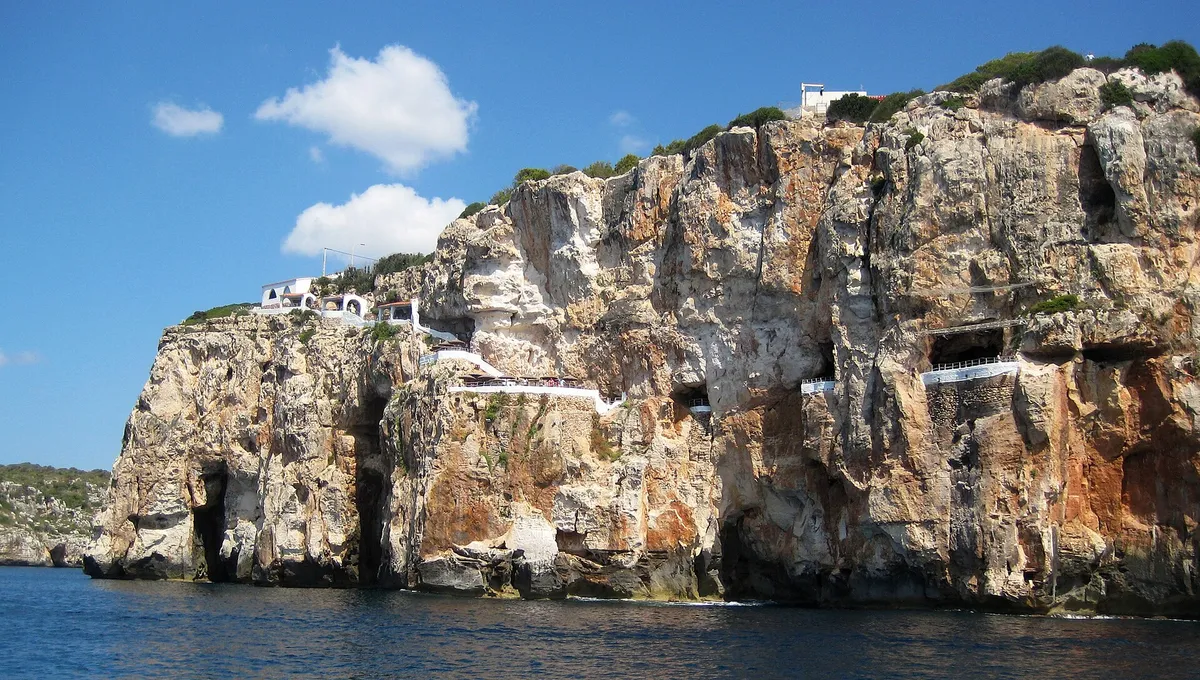
Cova d'en Xoroi from sea level: the water-only cliff stretch where the kayak-versus-boat decision is actually made. Photo: MinorKan, Wikimedia Commons, CC BY-SA 3.0.
Quick answer The short answer: boat first for most weeks, kayak when caves beat distance
For most weeks the boat is the first booking: listed half-days run $41-$87 and one loop reaches 8-10 coves with swim stops, gear and often food included. Choose a kayak tour when caves beat distance - about 60-90 euros buys three guided hours entering sea caves and paddling under sea arches the boats only photograph. Families with under-8s and seasickness-prone travellers lean boat; fit couples lean kayak. Compare both against the full nine-trip comparison and the cost and effort table, or see when the boat day repays its fare.
Key takeaways
- Boat = range: 8-10 coves, food on board, zero effort - the format that covers the coast.
- Kayak = access: the only product that enters the caves and passes under the sea arches.
- Price overlap: listed boat half-days $41-$87; guided kayak cave routes 60-90 euros with gear.
The Direct Answer
Book the boat if the question is how much coast you want to see; book the kayak if the question is how close you want to get. That is the whole decision, and the numbers behind it are short.
A half-day boat loop covers 8-10 coves - the most-reviewed listing in this comparison passes ten-plus coves and runs the south-coast caves close in 3.5 hours - while a guided kayak route works one cliff stretch intensively, entering the caves and crossing under the sea arches that boats circle from outside. The price bands overlap more than people expect: listed boat half-days run $41-$87 per person at the September 2026 check, and guided kayak cave routes run 60-90 euros with gear and guide, with the south-coast specialist publishing from €41 per adult and €29 per child aged 8-12.
Effort is the part that does not overlap. A boat day is zero-effort by design - the crew reads the wind, moves the route and serves the food. A kayak day is exercise on exposed water, about ninety minutes of paddling spread across three hours.
Families with under-8s, mixed generations and anyone prone to seasickness default to the boat; fit couples and solo travellers who want the caves at paddle level default to the kayak. The worth-it arithmetic for the boat format has its own page; the rest of this page is the kayak-versus-boat comparison itself.
What a Boat Day Does Best
The boat's product is range with the effort removed - a format that lets the coast, not the traveller, do the work.
Distance is the product
A half-day loop from Cala Galdana passes 8-10 coves and runs the cave stretch close enough to hear the swell working inside it; the full-day listing from Ciutadella adds two beach landings of up to two hours each, with sail-bys of the headlands between. A kayak tour sees a fraction of that coastline by design, because every metre is bought with paddling. Range matters most on Menorca precisely because the headline coves - Mitjana, Turqueta, Macarella on the south, Pregonda and Cavalleria in the north - chain together along water-only stretches that no car reaches and no short walk connects.
The crew absorbs the logistics
Everything that makes a water day tiring gets taken off the passenger: the skipper reads wind and swell at dawn and swaps coasts when the exposed side blows rough, with the route inside the Menorca marine reserve worked around the anchoring rules. Food follows the same logic - paella and sangria cooked on board on the full-day listing, a Menorcan tapas appetiser with a drink on the most-reviewed half-day, unlimited drinks and snorkel gear on the Fornells catamaran. Boarding ladders, allocated seats and a glass-panel harbour hour extend the format to travellers who never intend to swim at all.
The review record
The ratings argue the format rarely disappoints: 4.6 across 1,224 verified reviews on the south-coast half-day, 4.7 from 170 reviews on the two-hour sunset sail, 4.5 on both the budget Cala Galdana loop and the north-coast reserve run. Across the tours compared here in the full nine-trip comparison, the shared-boat format is the most-reviewed and most consistently scored product on the island - a fair proxy for what a first booking should probably be. The Ciutadella departure guide covers the western base for it.
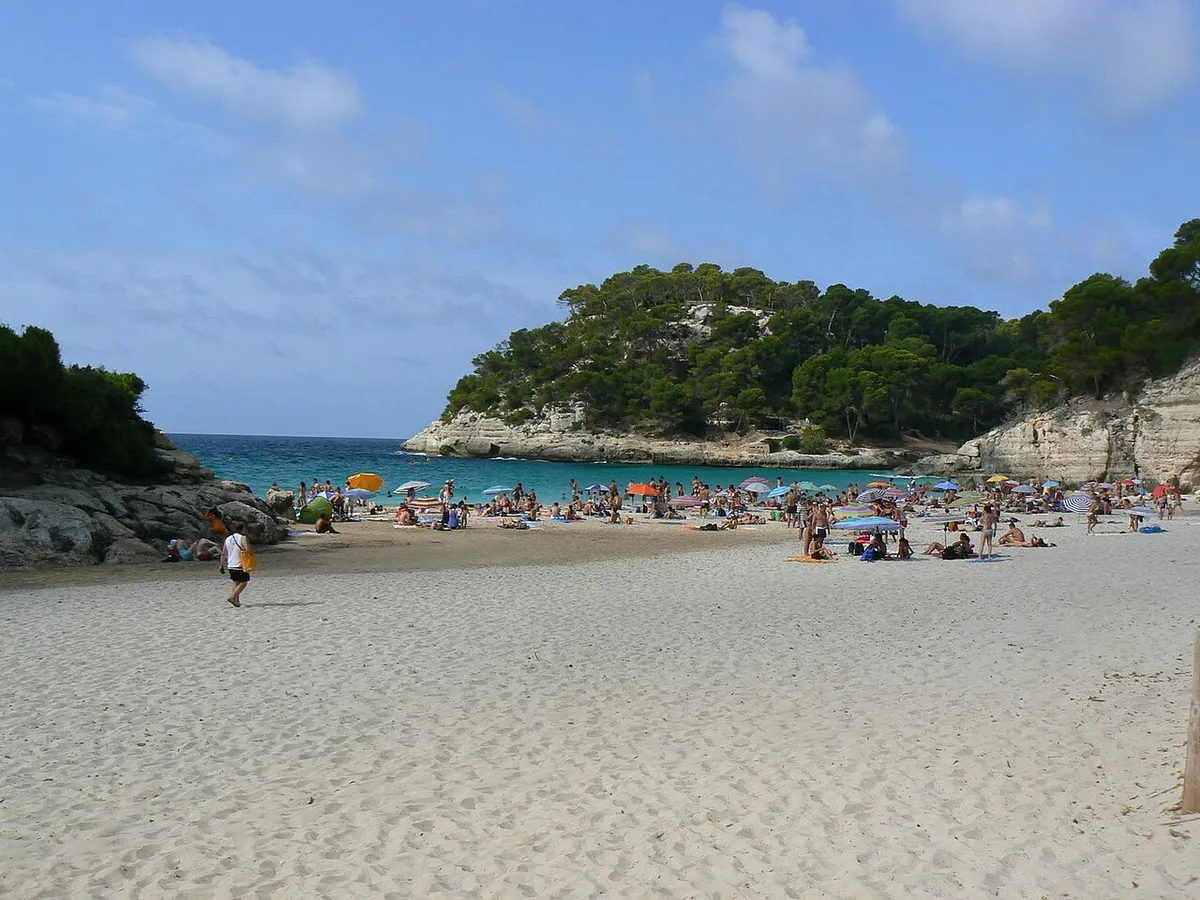
Cala Mitjana in August: one of the coves a half-day boat loop reaches by water while the road car parks are still circling. Photo: Menorca2010, Wikimedia Commons, Public domain.
What a Kayak Day Does Best
A kayak sits on the surface of the water, and that low viewpoint is the entire product: access at paddle level with a small group and a guide.
Water-level access
The guided cave routes from Cala en Porter and Es Canutells paddle between 50-metre cliffs, enter the sea caves and cross rock ledges where the water glows in torchlight. The Cave of Light - Cova de la Llum - gets its famous interior light show late in the day, which is why regulars book the 16:00 slot on the Cala en Porter route. Cova d'en Xoroi, the cliff-cave venue above the same beach, reads completely differently from a kayak at its base than it does as a passing landmark from a boat deck.
No boat in this comparison enters a cave; the deck view stays outside the mouth.
Small groups, quiet water
Groups run small - double self-bailing kayaks, a guide on the water, a rescue skiff on call - and the routes work the unspoilt stretch between Cala en Porter and Cales Coves, the largest prehistoric necropolis on the island, where the 30-minute snorkel stop lands over fish and white sand. The published price includes the technical kit (kayak, paddle, approved lifejacket, watertight canister) and a GoPro photo-and-video session sent afterwards; one operator adds seasonal fruit at the Cales Coves stop.
Exercise with a coastline attached
About ninety minutes of the three-hour route is paddling, split into short beats between caves and stops. The doubles are stable and aimed at first-timers - most customers have never sat in a kayak before, and the guide teaches the basic stroke before launch. For travellers who find deck-lounging restless, this is the water day that ends tired in a useful way.
Self-guided rentals (two to three hours, €25-35) exist at both villages once the format feels familiar.
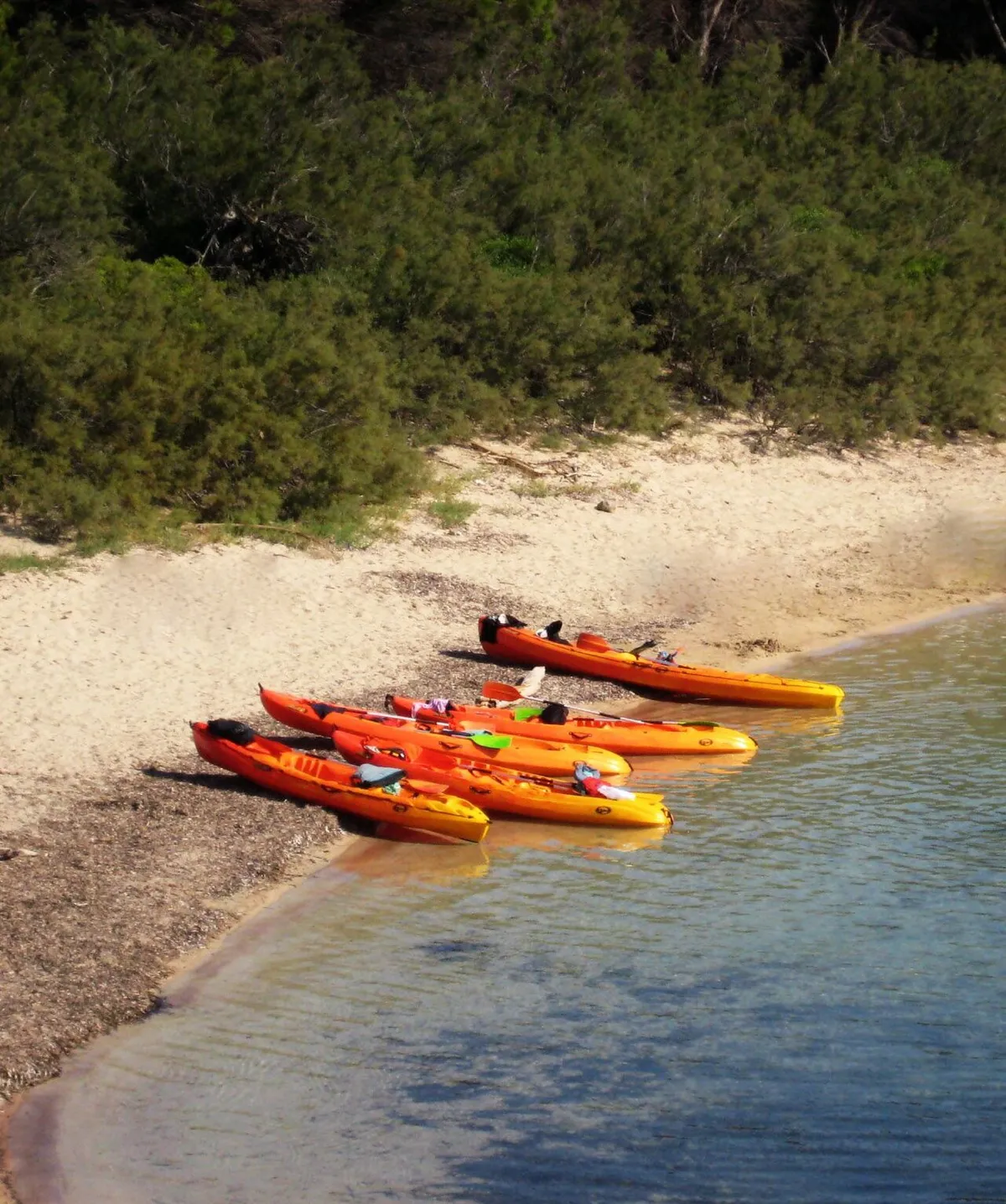
Kayaks at Illa d'en Colom near Es Grau: the north-east corner where the island's kayak days earn their quiet. Photo: MinorKan, Wikimedia Commons, CC BY-SA 3.0.
The Cave Factor: Where Kayaks Win
The south-coast caves are the kayak's signature, because getting inside them is a physical question of paddle, tide and skill rather than engine power.
Two published routes cover the ground. The Cala en Porter route enters four sea caves including the Cave of Light, adds a rock jump into a natural pool when the sea allows, and finishes with the snorkel stop at Cales Coves. The Es Canutells route is the ambitious one: up to eight caves on an unbuilt stretch of coast, including Ses Atxes with its huge stalactite - a chamber deep enough that the guide paddles it with a torch - plus narrow passages between cliffs.
Sea arches along the same 50-metre cliff line get the same treatment: kayaks pass under them, boats photograph them from a distance that the arch never quite closes.
The same geology writes the no-go list, which answers a fair share of the where-not-to-go questions about the island's water. Cave mouths and sea arches close in swell; the exposed north-coast cliffs come off the menu on a Tramontana - the strong north wind - and open north-facing beaches are the wrong place to swim when it blows. Kayak operators cancel outright once the sea state crosses their safety line, rebooking inside your stay or refunding in full; boats handle the same forecast by re-routing to the sheltered coast.
So on a rough day, where not to go in Menorca is anywhere under a cliff, inside a cave mouth or on an open north beach - and the honest operators on both formats will say so before you launch, which is exactly what the cancellation terms are for.
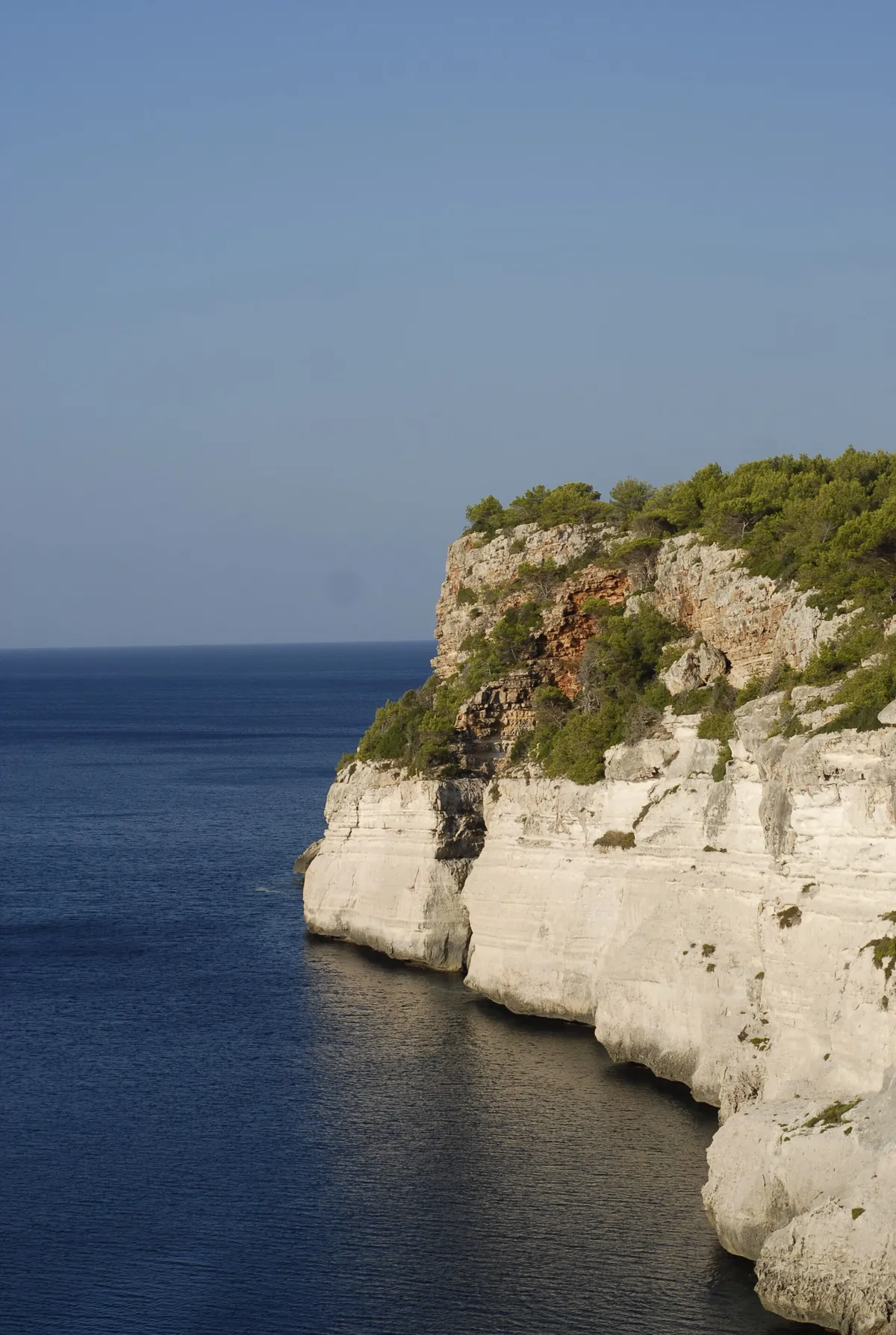
The Cala en Porter cliff line from above: 50 metres of limestone with the cave mouths at its base, entered by kayak, passed by boat. Photo: Osamores, Wikimedia Commons, CC BY-SA 3.0.
Cost and Effort Compared
The money overlaps; the sweat does not. Both statements are measurable, and the table below is the shortest honest version of the whole page.
The decision table
The figures below come from the tours compared here in this comparison at their September 2026 checked prices and ratings, and from the published 2026 rates of Menorca's best-documented kayak-cave operators; every figure is a from-price that moves with demand, so read it as the shape of the market rather than a quote.
| Factor | Boat half-day (this comparison) | Guided kayak cave tour |
|---|---|---|
| From-price | $41-$87 per person - Cala Galdana loop $41, Fornells snorkel catamaran $87 | 60-90 euros typical guided half-day with gear; the cave specialist publishes €41 adult, €29 child 8-12 |
| Time on the water | One to 3.5 hours listed; 7 hours on the full day with lunch | 3 hours including a 30-minute snorkel stop |
| Coast covered | 8-10 coves on a south-coast loop; north reserve runs from Fornells | One cliff stretch with 4-8 caves |
| Caves and sea arches | Viewed from the deck, outside the mouth | Entered by paddle; arches crossed underneath |
| Food and drink | Often included - paella lunch, tapas appetiser, open bar | Bring your own snack; fruit served on some routes |
| Effort | None - the crew handles wind and route | About 90 minutes of paddling; wind turns an easy paddle into a workout |
| Youngest travellers | From age 0 on the Fornells cove run; ages 3-80 on the reserve catamaran | From 6-7 years; under-14s share a double with an adult |
| Weather plan | Re-routes to the sheltered coast; the harbour hour runs in any weather | Cancels for safety - reschedule inside your stay or full refund |
What the sticker comparison misses
The fare overlap is honest but incomplete. Boat prices bundle the gear, the crew and often the food; kayak prices bundle kayak, paddle, lifejacket, guide and the GoPro session, with snorkel masks a small rental extra. Getting there differs too: the $41 half-day departs from Cala Galdana beach, already where south-coast resort stays put you, while both kayak bases sit east of Ciutadella and need a car - the free car parks at Cala en Porter and Es Canutells fill between 11:30 and 16:00 in July and August, so the early slots solve parking as well as sea state.
Effort, stated plainly
Wind is the variable that decides how a kayak day feels. Menorca's afternoons regularly raise a breeze that turns an easy paddle into a workout on exposed water; the guides pace the group for it, but they cannot remove it, and travellers who want the caves without the calorie bill should say so at booking and pick the morning slot. Boats convert the same wind into sailing or a smoother ride - the crew absorbs what the paddler would.
Couples, Families, Fitness - Who Picks Which
The two formats sort parties cleanly once the party's constraints are named, and the operators' own rules do most of the sorting already.
Families with under-8s: boats win, and not narrowly
The kayak operators carry small children carefully - ages 6-7 ride free as the third occupant between two adults in double kayaks, MenorcAventura rigs triple and quadruple kayaks for under-8s on calm days, and under-14s must share a boat with an adult. But the same rules are the tell: a minimum age, a child seated still between two paddlers, and a cancel-in-swell policy. Double kayaks with small children aboard test patience exactly when the water moves, which is why families with under-8s default to the boat deck with its swim ladder and shading.
The family boat-trip guide covers that side in detail.
Couples: energy is the split
The sunset sail is the boat format's romantic answer - two hours under sail off Fornells, rated 4.7 from 170 reviews, timed to finish before dinner reservations and priced at $84 a head, about $168 for two. The active-couple answer is the kayak cave route: shared paddling, torch-lit chambers, the Cave of Light's late-afternoon beam, photos included in the fare. Both formats keep a couple's day inside about $170-€180 at published rates, so the choice is about the story of the day rather than the receipt.
Fitness, mobility and stomachs
Paddlers with reasonable shoulders and a swimming habit get the richer story from the kayak; the routes require the ability to swim, full stop, and pregnancy needs a doctor's written consent. Travellers managing limited mobility, heart conditions or seasickness get the better day from the boat - the glass-panel Mahón hour needs no swimming at all and runs on harbour water when the open coast is closed. Large mixed groups stop arguing and book both formats across one week, which is easier than it sounds.
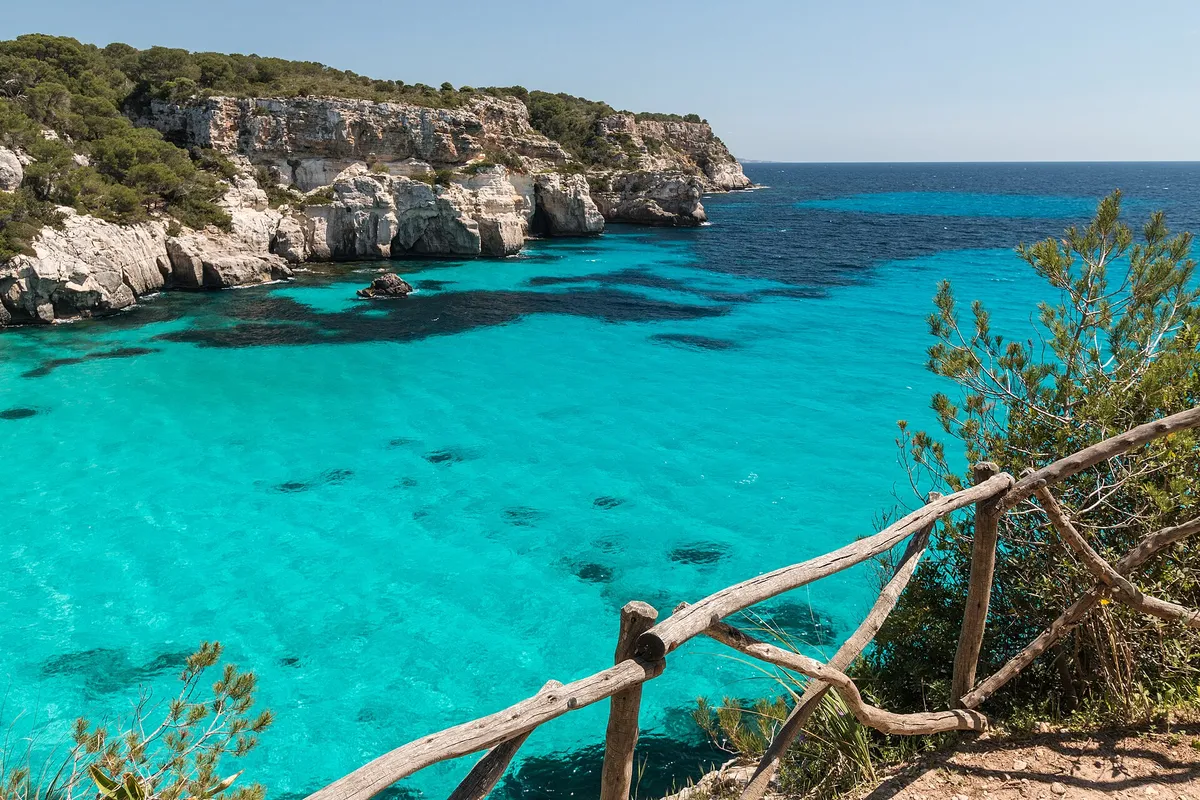
Cala Macarella from the coast path: the shared ground of the comparison - reachable on foot at a cost, and by half-day boat without it. Photo: Paul Stephenson, Wikimedia Commons, CC BY 2.0.
Doing Both Without Losing a Day
The formats share the same water and complementary hours, which makes combining them a scheduling exercise rather than an extravagance.
Kayak slots run at 9:00, midday and 16:00; the south-coast half-days run morning or afternoon; the sunset sail owns the evening. A practical split for a south-coast week: book the boat half-day from Cala Galdana early in the stay, then a kayak cave day from Cala en Porter later in the week, holding the 16:00 slot for the light inside the Cave of Light. For a Fornells base, the 12-guest reserve catamaran takes one side of the week and the family-friendly kayak water at Es Grau - with Illa d'en Colom just offshore - takes the other.
The two days do not compete for the same hours; they alternate.
One operator already sells the hybrid: a guided cave route from Cala en Porter that hands over to a boat leg towards Cala en Turqueta - paddle the caves, ride the distance. And the booking logic is identical on both sides of the fence: whichever format you book first, book it for the first half of the holiday, because both rebook or refund on weather and an early slot leaves room to move. The boat-trip kit list covers a kayak day too, minus the dry bag the kayak operators provide, and the best-months guide decides which coast each format gets.
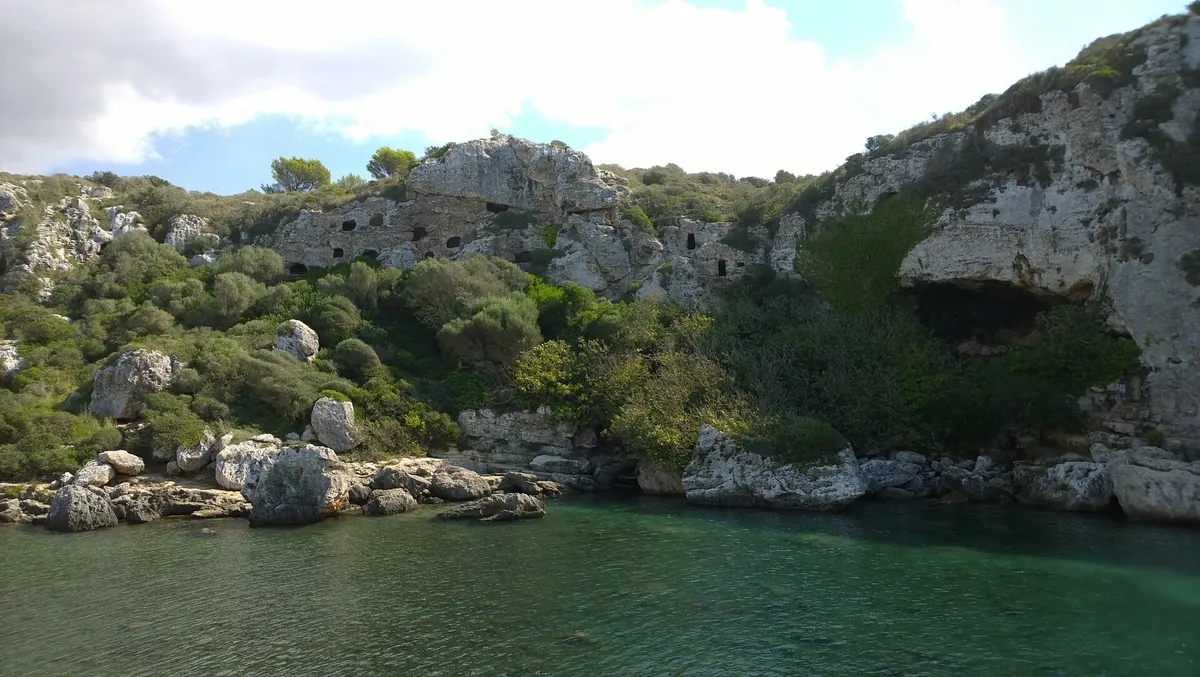
Cala en Turqueta: the classic Menorcan cove at the end of the boat loops - and of the hybrid kayak-plus-boat day. Photo: Ben Salter from Wales, Wikimedia Commons, CC BY 2.0.
Kayak-or-Boat Questions
Are kayak tours in Menorca worth it?
Yes, for the cave coast and for travellers who want the exercise - a guided route runs three hours with all gear, a guide, a 30-minute snorkel stop and a GoPro session included, and the south-coast specialist has guided more than 27,000 people since 2020. The honest limit is range: a kayak sees one cliff stretch intensively, while a boat half-day covers 8-10 coves for a similar fare. Worth it as the active day of the week; not a substitute for the distance a boat covers.
Can you kayak into the caves on the south coast?
Yes - it is the signature product. The Cala en Porter route enters four sea caves including the Cave of Light, whose interior lights up late in the afternoon; the Es Canutells route enters up to eight caves, including Ses Atxes, a chamber so deep the guide paddles it with a torch. Entry happens only when the sea is calm enough: operators cancel on swell and rebook within the stay or refund in full, which is why the routes are best booked for early in a holiday.
Do you need kayak experience in Menorca?
No - no previous paddling experience is needed, and most customers are first-timers. You must be able to swim: lifejackets are worn throughout, but swimming is a compulsory safety requirement. The boats are stable double self-bailing kayaks, the guide teaches basic technique in a briefing 25-30 minutes before launch, minimum ages run 6-7 depending on the route, and paddlers under 14 share a double with an adult. Rentals of two to three hours exist for a gentler first contact with the format.
What should I wear for a kayak tour in Menorca?
Beachwear that survives sitting in water: a rash vest or t-shirt over swimwear for the paddle hours (shoulders burn low on the water), a hat with a chin strap, and sunglasses with a cord. Everything you wear gets splashed; everything you bring travels in the operator's dry container. Reef shoes help at the cave landings where paddlers disembark on rock.
Can non-swimmers join a kayak tour in Menorca?
Only with honest limits: the guided routes supply buoyancy aids and stay in company, but a capsize puts a non-swimmer face-down in open water for the seconds it takes the guide to reach them, and the caves section paddles over deep water. Most operators ask directly. For travellers who want the water without that exposure, the listed boat trips - ladders, decks, crew - are the format built for it.
Boat Trip or Kayak: The Final Call
Asked what the best excursions to take in Menorca are, the listing evidence points at five: the one-hour Mahón harbour circuit for arrival days and weather-proofing; a south-coast half-day with swim stops for the cove run; the north-coast marine reserve catamaran for the wild side; the two-hour sunset sail for the evening slot; and - on the active column - a guided kayak cave route, the only product on the island that puts the traveller inside the caves rather than outside the mouth. A kayak tour is worth it for exactly that access, and for the exercise baked into the day; the boat is worth it for distance, comfort and food, and for every party that includes under-8s, non-swimmers or uncertain stomachs. The price bands overlap enough that the choice is about the day wanted, not the money spent - and most weeks have room for one of each. When the boat column wins the argument, the worth-it verdict prices it out.
Next step on the comparison: the price-and-format table on the homepage sets every listing side by side, and the two pages this guide keeps returning to are south coast boat excursion and fornells half day catamaran - the fastest way from reading to a price.