 Menorca Boat Tours
The Menorca Marine Reserve: Zones, Rules and the Boat Trips That Sail Inside It
The Menorca Marine Reserve is the reason the north coast looks the way it does from a boat deck: water clear enough to read the meadow below, coves with no road behind them, and fishing boats working under rules that date back a generation. It is also the part of the island most boat-trip searches touch without naming it - the Fornells departures, the snorkel catamarans and the cove cruises all operate in or beside managed water. This guide explains what the reserve actually is, where its boundaries fall, which rules reach a day passenger, and which of the tours compared here compared on this site sail inside it, using the checked listing data and the Spanish and UNESCO designations that define the place. For the south-coast counterpart, the comparison table sorts every boat compared here by coast and duration; for the packing side, the standard kit list covers the bag, and it is the practical menorca marine reserve boat trip guide.
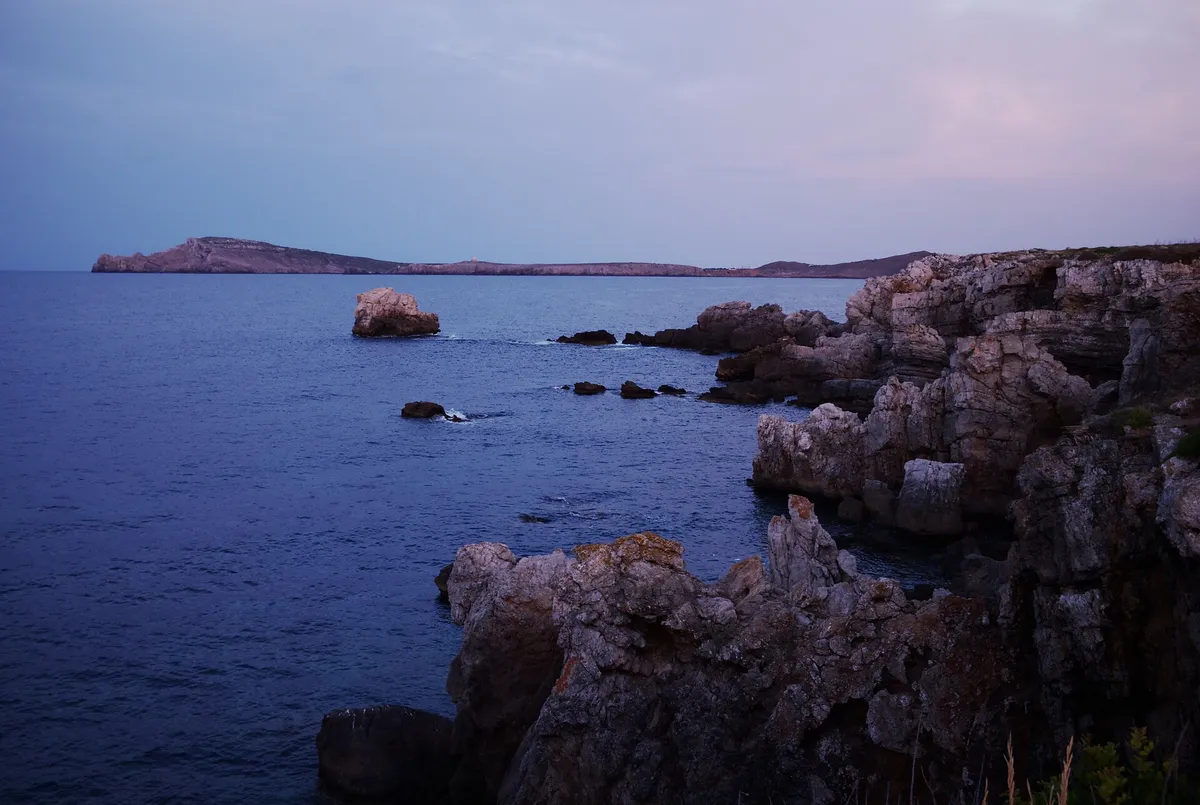
Cap de Cavalleria, the reserve's western gate: from this headland the managed north-coast water runs east to Addaia. Photo: Nicolas Vigier, Wikimedia Commons, CC0.
Quick answer The short answer: managed north-coast water, no permit needed, swimmers notice only the clarity
The Menorca Marine Reserve protects the north-coast waters from Cap de Cavalleria to Addaia - 5,100 hectares managed since 1999 - and sailing inside it needs no permit or ticket: you simply book a trip that goes. The Fornells coves cruise, the 12-guest sailing catamaran and the snorkel boats run their swim stops in reserve water; swimmers notice only the clarity. Zoning restricts fishing and anchoring, not swimming or snorkelling. Pack for sun and spray with the standard kit list and let the crew handle the rules.
Key takeaways
- The boundaries: Cap de Cavalleria in the west, Addaia in the east, the whole Fornells bay between - 5,100 hectares of managed water since 1999.
- The effect on a boat day: crews anchor only where the reserve allows, fish stay plentiful on the meadows, and the water is the clearest on the island.
- The bigger frame: the whole island has been a UNESCO Biosphere Reserve since 1993, and the marine reserve is its north-coast core at sea.
What the Reserve Actually Is
The Menorca Marine Reserve is a protected marine area covering the waters off the island's north coast, managed within the Spanish ministry's marine-reserve programme and established in 1999. It protects about 5,100 hectares of sea, running along the north shore from the Cap de Cavalleria lighthouse east towards Addaia, and it exists for a working reason rather than a scenic one: to keep artisanal fishing viable by managing what is taken and where, and to protect the posidonia meadows and reefs that make the north coast productive in the first place. The designation is Spanish national law, not a marketing label - it changes what fishing gear may be used, where anchors drop, and how much may be taken out of the water.
What it means for a visitor on a boat
The practical meaning for a day passenger is mostly invisible, which is the point. There is no gate, no ticket, no entry fee and no permit for swimming or sailing - the listings in this comparison that operate the area book passengers exactly as they would anywhere else on the coast. What changes under the surface is behaviour: crews anchor where the reserve allows rather than wherever convenient, engine-off sailing is a deliberate choice on the sailing listings, and the fish a snorkeller sees are there because nets and spears face limits that most of the Mediterranean coast abandoned.
Reviews of the north-coast trips regularly describe large schools over the meadows as the day's highlight, which is the protection doing exactly what it was designed to do.
Where It Starts and Ends
The reserve's western gate is Cap de Cavalleria, the bare headland at the top of the island's map, and it runs east along the north shore to Addaia, a distance that covers the island's least-built coastline. Inside those boundaries sits the bay of Fornells - the wide, sheltered water that gives the village its fleet - together with the road-less coves west of it: the red sands of Cala Pregonda, the twin beaches under the cape, and the rocky runs where the north-coast listings drop their swim stops. The beaches at Cavalleria lie just inside the western end, which is why a car park, a walk and a covered bag is the only way to reach them from land while the boats see them from the water in half an hour from Fornells.
Fornells, the harbour in its heart
Fornells sits at the reserve's centre of gravity, and the geography explains the fleet: a bay deep enough to be sheltered when the tramontana blows, opening directly onto the managed coves to the west and east. The village's listings - the shared half-days, the snorkel catamaran, the 12-guest sailing boat, the private charter and the sunset sail - all clear the same headland into reserve water, which is why five of the boats in this comparison operate from one small harbour. A traveller who books in Fornells has booked a reserve trip by default; the remaining four boats sail the south coast and Mahon's harbour, outside the boundaries entirely.
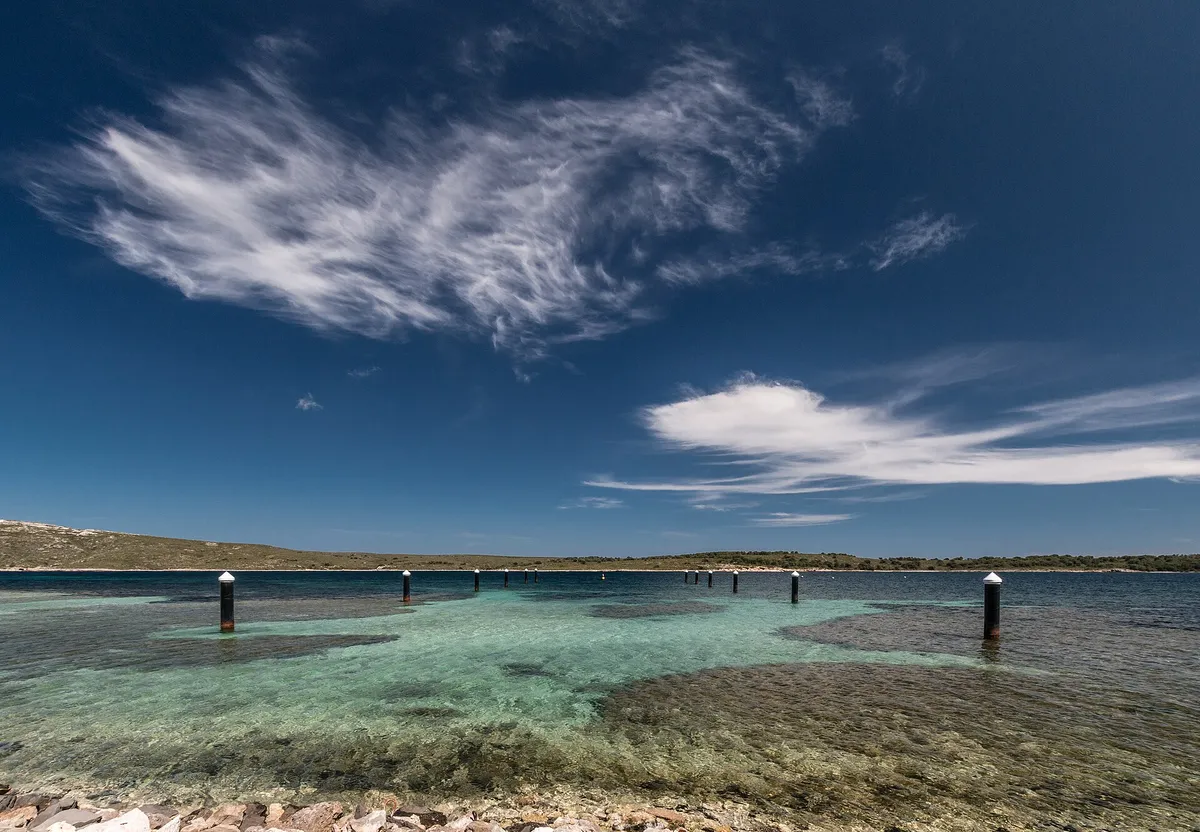
Fornells bay, the reserve's working harbour: the shared catamarans, cove cruises and charters all clear this headland into managed water. Photo: Markus Trienke, Wikimedia Commons, CC BY-SA 2.0.
The Rules That Touch Your Boat Day
The reserve is zoned, and the zoning decides where a boat may fish, may anchor, and may not go at all. A day passenger never handles the map - the crew does - but the zone names appear in crew briefings and on the charts at the Fornells kiosks, and the framework below is the one the Spanish ministry applies to its reserves, reviewed here against the ministry's reserve pages and UNESCO's Man and Biosphere descriptions, September 2026. The headline for swimmers: none of the zones closes the water to swimming, which is why the swim stops on the reserve listings look and feel like swim stops anywhere.
| Zone | What it restricts | What it means for your boat day |
|---|---|---|
| No-take / integral zones | Fishing and taking of any kind excluded; anchoring excluded or tightly limited | The crew treats these as the quiet rooms of the reserve - passes through, anchors elsewhere, and the snorkelling is often the best of the day |
| Restricted fishing zones | Licensed artisanal fishing only, under gear and catch limits | You share the water with a few small working boats; swim stops and cruise routes run as normal |
| Managed anchoring zones | Anchoring only at authorised points; anchoring on posidonia meadows is illegal everywhere in the reserve | The boat ties to buoys or drops anchor where the charts allow - the reason a swim stop sits where it sits |
| The bay of Fornells itself | General management applying the reserve's rules inside the sheltered bay | Boarding, briefing and the first or last swim of the day often happen inside the bay |
The rules that reach a passenger's hands
Three. First, the briefing: organised trips brief their guests before the water - the north-coast listing states its crew briefs on the anchoring rules that protect the posidonia - so the fifteen minutes at the pontoon are part of the ticket, not a formality. Second, nothing is taken out of the sea: fishing lines have no place on a shared deck in the reserve, and shells, posidonia bands and even pebbles stay where they lie.
Third, the meadow is a no-standing zone in effect - swimmers who feel grass underfoot are floating over posidonia, and the instruction is to fin up and swim on rather than stand, which costs nothing and is the single rule that matters most.
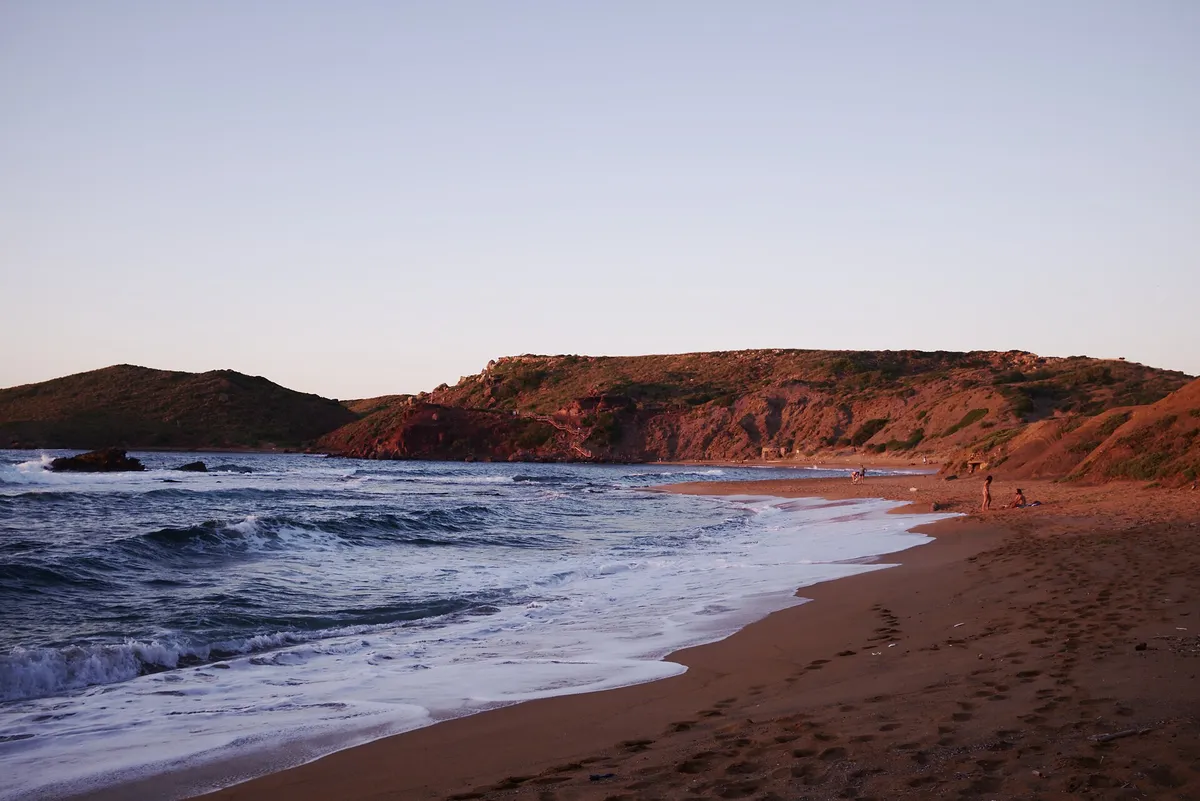
Platges de Cavalleria lies just inside the reserve's western end - a beach with no road to its sand, which is why its best views come off a boat. Photo: Nicolas Vigier, Wikimedia Commons, CC0.
Posidonia: The Meadow Under Your Anchor
Posidonia oceanica is the seagrass that fills the reserve's shallow floors, and it is the reason anchoring is illegal on the meadows. It looks like seaweed and is not one: it is a flowering marine plant that grows in metre-thick living mats, sends up the fibre balls that wash onto the north-coast beaches in autumn, and grows back by millimetres a year - an anchor dragged across it does damage measured in decades, which is why a dropped hook is the reserve's cardinal offence and why the managed-anchoring zones exist at all. The listings that sail here treat the rule as routine: the sailing catamaran and the private charter both state that they anchor only where the reserve allows, and the sailing-first note about running engine-off is partly silence, partly posidonia.
The meadow that makes the water clear
Posidonia is also the answer to the question every first-time visitor asks by the second day: why is the water this clear. The meadows trap and bind the sediment that would otherwise drift with the current, oxygenate the water, and hold the sea floor in place; combined with the absence of rivers carrying runoff to the coast, they leave the north coast reading blue-on-sand from a deck above ten metres of water. The clear water and the protected meadow are the same fact seen from above and below, which is why the reserve, the meadows and the swimming are one subject rather than three.
The bigger protection frame
The marine reserve sits inside a wider designation: the whole island, land and surrounding water, has been a UNESCO Biosphere Reserve since 1993, recognised under the Man and Biosphere programme. The Biosphere Reserve label does not add fishing rules the way the marine reserve does; it frames the island's development model - why there is no high-rise north shore, why the coves behind the beaches stay dark at night, and why a boat day sees coastline rather than construction. A traveller reads the two designations together: the national reserve manages what happens in the water, the UNESCO frame manages what happens along it.
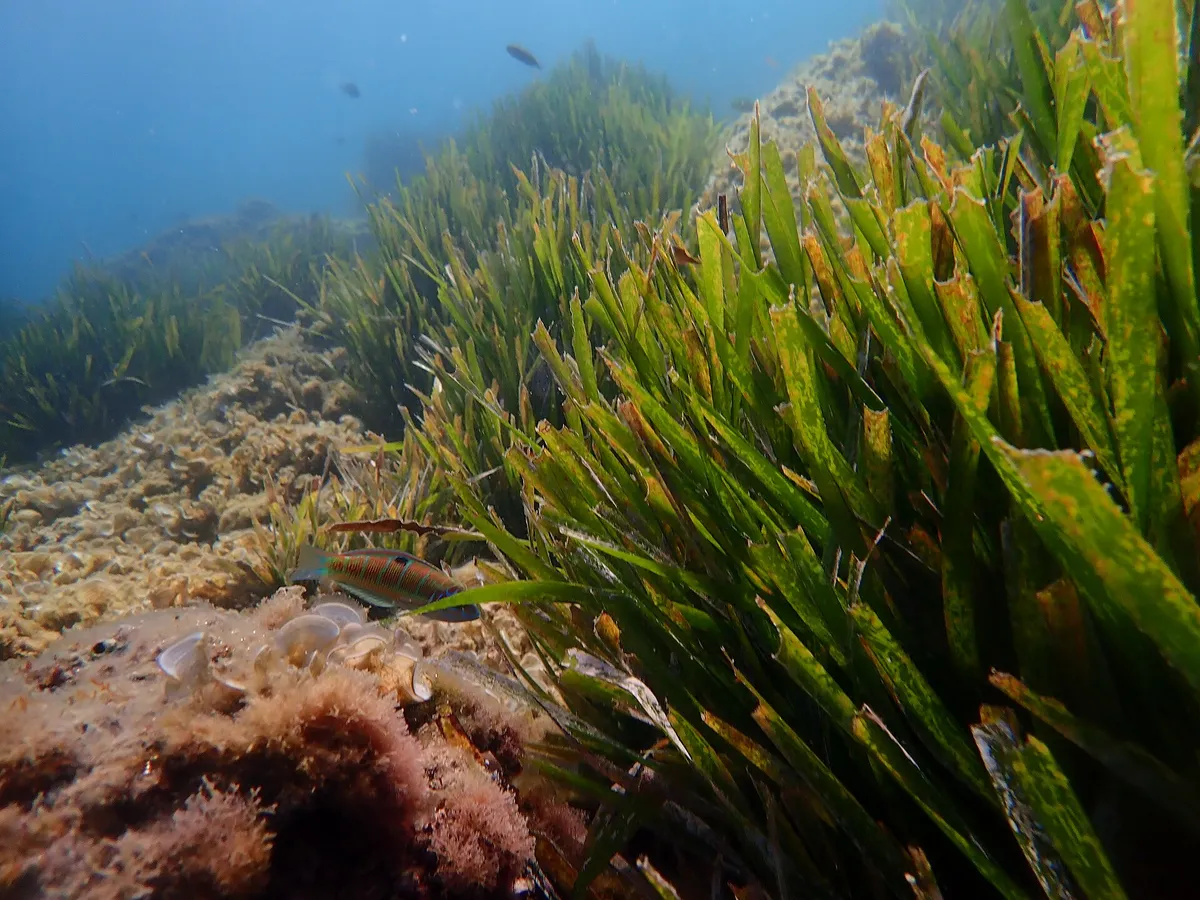
A Posidonia oceanica meadow with fish and rock in Balearic water: the protected seagrass that anchors must avoid and the reason the reserve's water reads blue. Photo: CofreDeSofre, Wikimedia Commons, CC BY-SA 4.0.
Which Listings Sail Inside It
Five of the tours compared here in this comparison operate from Fornells, and their routes run inside or along the reserve; the other four (the Ciutadella day cruise, both Cala Galdana boats and the Mahon harbour hour) sail the south coast and the great harbour, outside the boundaries. The reserve boats split by group size, duration and what is included, and the checked figures from their the listing platform and the booking platform listings, September 2026, line up as follows:
| Listing | From price | Duration | Group | Rating |
|---|---|---|---|---|
| North coves cruise (Fornells) | $50 per person | 3 hours 30 minutes | Up to 50 guests, ages 0-100 | 4.5 across 69 reviews |
| Sailing catamaran (Fornells) | $83 per person | 3 hours 30 minutes | Maximum 12 guests, ages 3-80 | 4.4 across 140 reviews |
| Snorkel catamaran (Fornells) | $87 per person | 3 hours | Shared, no cap stated | 4.6 across 298 reviews |
| Private full-day charter (Fornells) | $825 per group | About 7 hours | Your group only | 4.6 across 9 reviews |
| Sunset sail (Fornells) | $84 per person | 2 hours | Shared, no cap stated | 4.7 across 170 reviews |
How to choose between the five
The family logic points at the north coves cruise: the 0-100 age range is the most open in the comparison, the price is the lowest on this coast, and the crew briefs passengers on the reserve rules as part of the trip. The small-group logic points at the 12-guest sailing catamaran, the only shared listing with a hard cap, where the engine-off sailing is the experience rather than a footnote. The all-inclusive logic points at the snorkel catamaran: gear, drinks and snacks are in the ticket, which removes three decisions from the morning.
The private logic points at the full-day charter, whose route through the reserve is set with the skipper on the day. And the two-hour logic points at the sunset sail, which treats the reserve as a golden-hour backdrop and carries the comparison's highest rating at 4.7.
Swimming and Snorkelling in the Reserve
Snorkelling is legal and unregulated for individuals in the reserve - no licence, no fee, no zone excludes a swimmer - and organised trips brief their guests on the rules as part of the day. The briefing takes minutes and covers the matters above: swim off the sand or off the ladder, do not stand on the meadow, leave everything in place, and follow the crew's flag and whistle as you would on any shared water. What the protection adds to the water itself is the fish: reviews on the Fornells boats describe salema schools running over the grass, small wrasse at arm's length under the ladder, and octopus on the rock margins - the inventory a healthy meadow produces, seen from a mask at the surface.
What the swim stops look like in practice
The pattern across the listings: two stops, sea state permitting, of twenty minutes to half an hour each on the half-days, with gear included on the snorkel catamaran and ladders back aboard on all of them. The clarity is the difference visitors name - ten metres of visibility is common over the meadows on a calm day, against the milky green a swimmer gets off an urban beach. Children take to it quickly; the family listings keep stops short and shallow, and the dedicated with-kids guide covers the age questions in detail.
Non-swimmers stay aboard with shade and commentary, and anyone between can float on the surface doing nothing at all, which over this much life is a perfectly full activity.
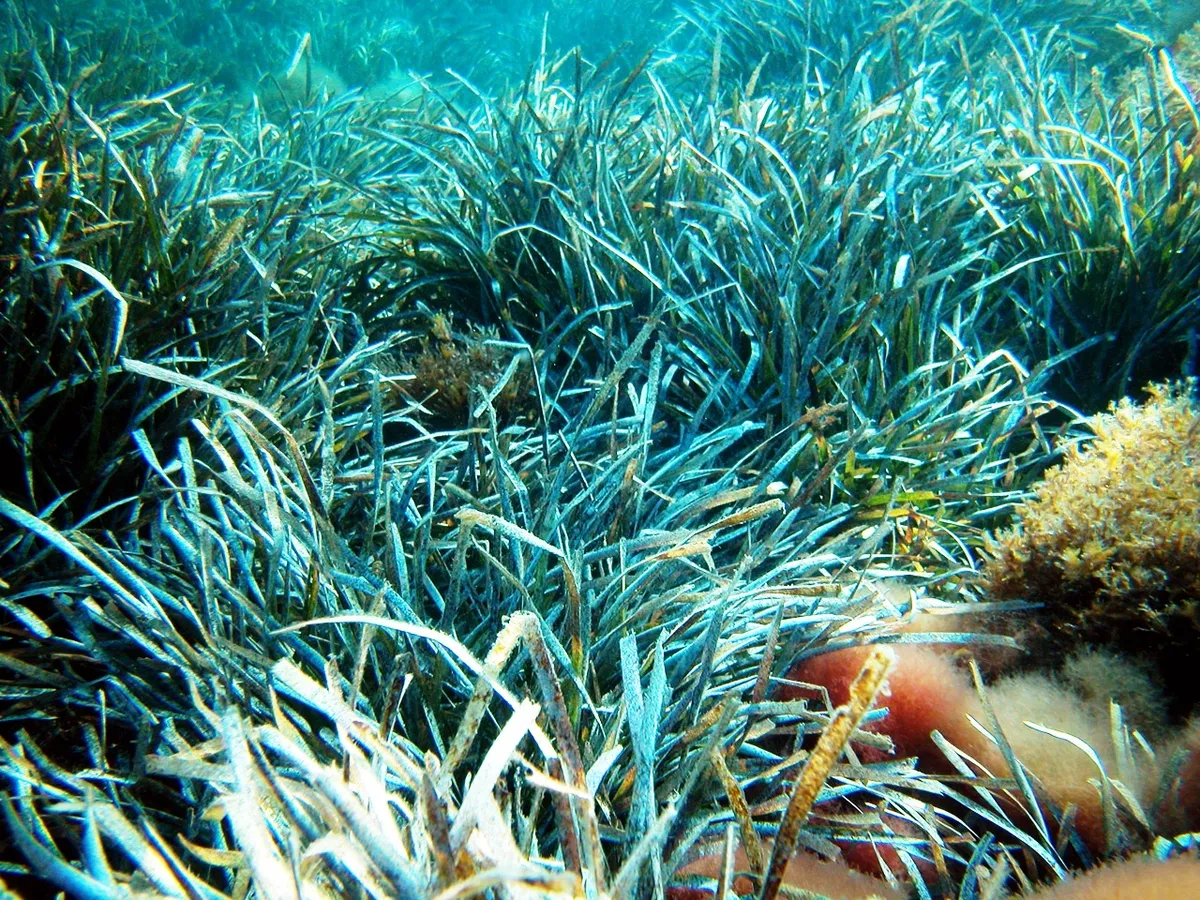
Salema schooling over Posidonia in Mediterranean water: the everyday view at a reserve swim stop, where the meadow does the attracting. Photo: Alberto Romeo, Wikimedia Commons, CC BY-SA 2.5.
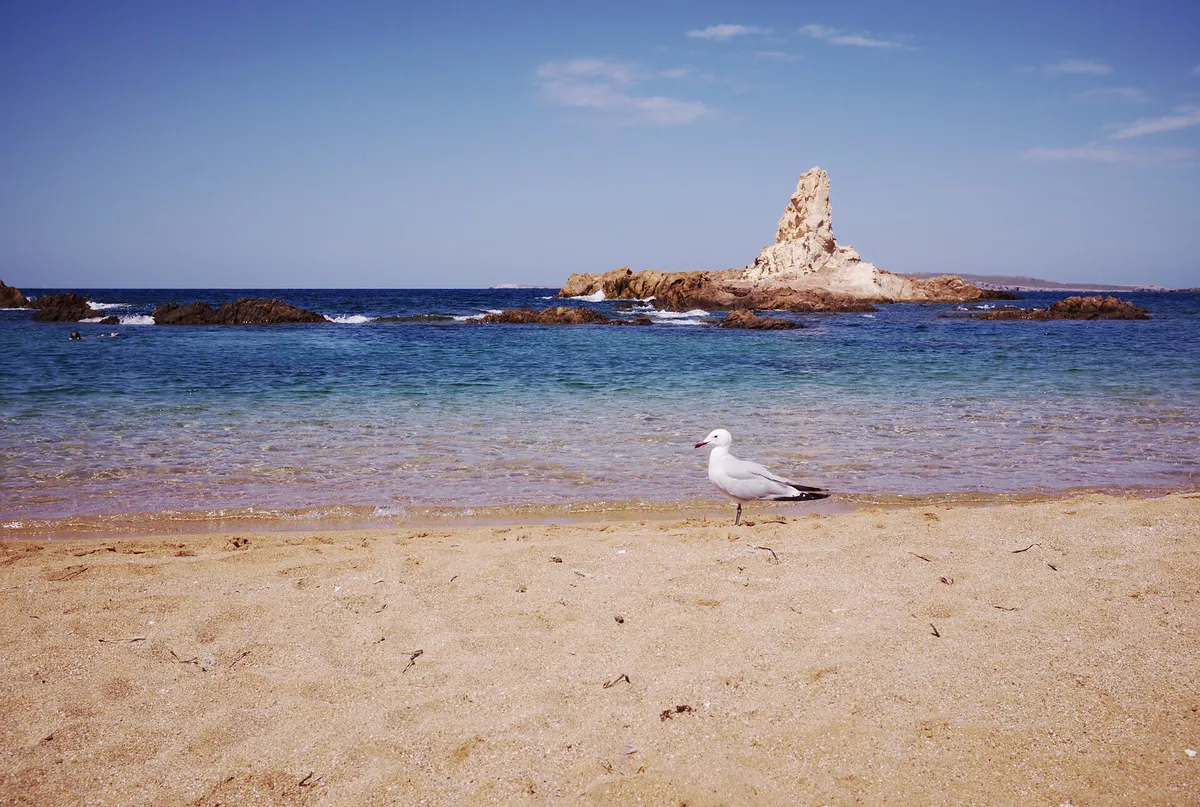
Cala Pregonda, a road-less cove inside the reserve's shore: the north-coast listings reach it in half an hour from Fornells, no hike required. Photo: Nicolas Vigier, Wikimedia Commons, CC0.
Reserve Questions
What is the Menorca marine reserve?
A protected marine area on Menorca's north coast, running from Cap de Cavalleria east to Addaia and covering about 5,100 hectares, managed since 1999 within the Spanish ministry's marine-reserve programme. It is zoned: no-take cores, restricted artisanal fishing and managed anchoring, with posidonia meadows protected everywhere. The whole island has been a UNESCO Biosphere Reserve since 1993, and the reserve is that frame's core at sea. For a visitor it means no gates or fees - just managed water, fuller fish life and the clearest swimming on the island.
Can you swim in the marine reserve?
Yes. The zoning restricts fishing and anchoring, not swimming: snorkelling is legal and unregulated for individuals, and no zone closes the water to a swimmer. Organised trips brief their guests before the first stop - keep off the meadow, leave everything in place, follow the crew's signals - and the swim stops on the Fornells listings run exactly as they would on any coast, with two stops and ladders back aboard. The difference is under the surface: visibility over the meadows and the fish life the protection produces.
Why is Menorca's water so clear?
Three reasons stack. The posidonia meadows bind and filter the sediment that would otherwise cloud the water, and they hold the sea floor in place. The island has no rivers, so no land runoff paints the coast green after rain. And the protection - the marine reserve at sea, the island-wide Biosphere Reserve on land since 1993 - keeps development off the north shore and trawling out of the shallows, so the sediment stays put. A swimmer sees the combined result: blue-on-sand water that reads ten metres down on a calm day over the meadows.
Where does the Menorca marine reserve start and end?
On the north coast, from Cap de Cavalleria in the west to Addaia in the east - about 5,100 hectares of managed water with Fornells Bay at its centre. The ministry's reserve pages carry the official boundary maps; for a boat day the practical version is simple - the Fornells departures on this site sail inside it from their moorings.
Is fishing allowed in the marine reserve?
Only under the reserve's zone rules: professional and recreational fishing are managed activity by activity, from permitted with limits in most of the reserve to prohibited outright in the no-take zones. Swimmers and passengers on the Fornells boat trips notice none of the machinery - what the zoning buys them is exactly the fish life and the clarity that unmanaged water loses.
The Verdict: Who Should Book the Reserve Water
The reserve answers the question of which coast to book by coast type rather than by marketing. The north coast suits travellers who want the island as it is: road-less coves, meadow-clear water, fish in schools, and crews whose briefings are part of the product - the trade is a wind-sensitive coast that re-routes on tramontana days and a drive to Fornells from most resorts. The south coast suits travellers who want the postcard coves, beach landings and the day-cruise lunch, and the two coasts are not in competition - a week comfortably holds one of each. The honest way to choose is by group and hour rather than by hype: families open the day on the 0-100 coves cruise, small groups sail the 12-guest catamaran, and the hour after five belongs to the sunset sail. When the coast is chosen, the comparison table does the arithmetic of price and group size in one screen.
Next step on the comparison: the price-and-format table on the homepage sets every listing side by side, and the two pages this guide keeps returning to are north menorca coves boat trip and fornells half day catamaran - the fastest way from reading to a price.